

If you search for “imagen 3” today, here is the verified truth as of August 2026: Imagen 3 is switched off on the Gemini API, Imagen 4 is deprecated and shuts down on August 17, 2026, and Google has moved all image generation to the native Gemini branch nicknamed Nano Banana. The generator is still there, but it is no longer called Imagen.
I know it sounds like an abrupt change of course. I work with these models every day, and within a few months the name “Imagen” went from being Google DeepMind’s crown jewel to a technology being phased out. In this article I explain what the Imagen family was, what it can really do, where you use it today (Italy included), how much it costs via API with the official numbers, and above all what you should use now instead of a model that is about to be switched off. This piece is part of my guide on how to create AI images for free.
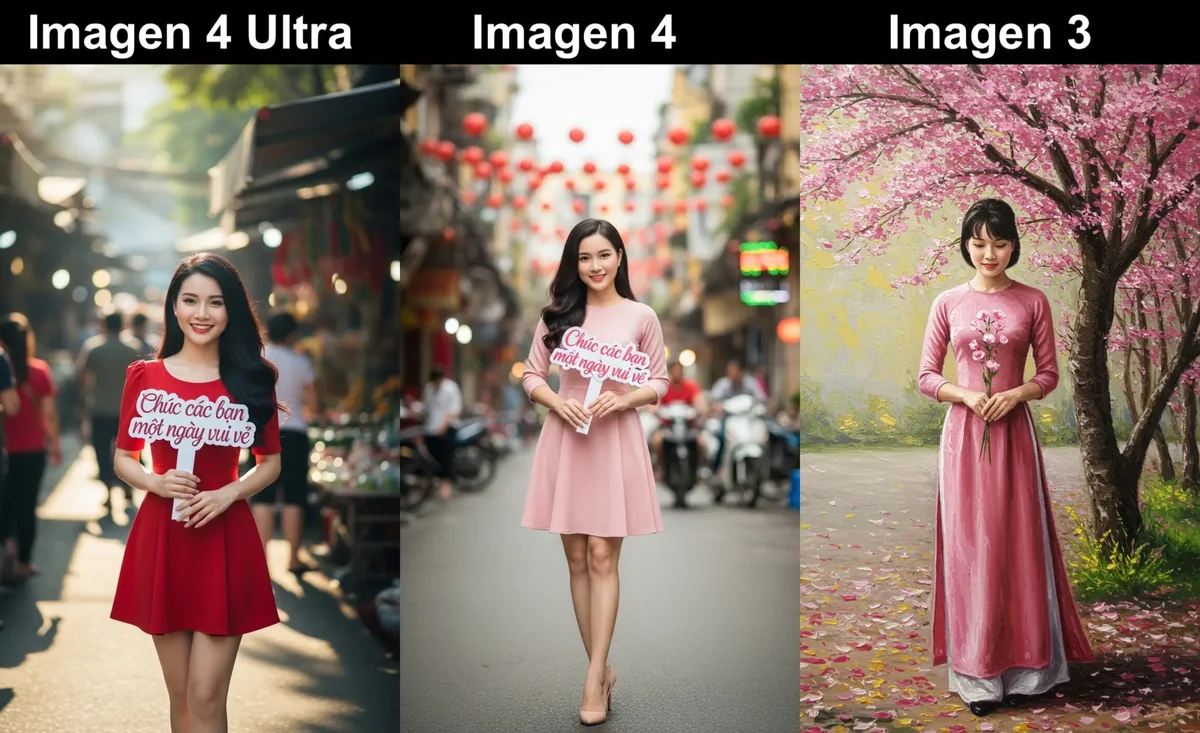
Imagen 3 and Imagen 4: the real status in August 2026
Let’s start with the thing almost no article states clearly, and it is the reason this piece exists. Imagen 3, the model many people still search for by name, is no longer accessible on the Gemini API: Google explicitly states that the model has been retired. Imagen 4, released just a year ago, is already marked as deprecated with a shutdown date set for August 17, 2026, and the documentation recommends migrating to Gemini’s image models.
In plain English: if you open the Gemini app and generate an image, today there is no longer Imagen 3 behind it but the native Gemini branch. The word “Imagen” survives in API pricing and in some enterprise contexts, but as a consumer product it has effectively been absorbed. Not a minor detail, because anyone who gets attached to the name risks building a workflow on a model that will stop responding in a few weeks.
What the Imagen family is and where it comes from
Imagen is the family of text-to-image models developed by Google DeepMind. Text-to-image means you start from a text description (the prompt) and the model builds the image from scratch, with no need for a starting image. It is the classic approach of dedicated generators, different from the conversational editing we will see in a moment.
The project was born as research and became a product within a few years. The first version was a scientific demonstration, not a tool you could use. With later versions Google progressively raised the quality of photorealism, the rendering of text inside images and the available resolutions, eventually bringing Imagen into the Gemini app, ImageFX and Vertex AI. Here is the verified timeline.
| Version | Release | Status in August 2026 |
|---|---|---|
| Imagen 1 | May 2022 | historical, never released publicly |
| Imagen 2 | December 2023 | historical |
| Imagen 3 | August 2024 | switched off on the Gemini API |
| Imagen 4 | May 20, 2025 (Google I/O) | deprecated, shutdown August 17, 2026 |
Reading this table is simple: no version of Imagen is today the choice to build on. The first two are museum pieces, the third is already off on the API side, the fourth has an expiration date written on the calendar. The living, growing branch is a different one, and we look at it in the section dedicated to Nano Banana.
What Imagen can do: real capabilities
Despite the phase-out, it is worth understanding what Imagen brought to the table, because many of those capabilities flowed into the current models. I only report what is documented, without inventing accuracy percentages or generation times that float around other blogs with no source.
Photorealism and styles. Imagen 3 was strong on photorealistic images and a wide variety of artistic styles. In the Gemini app the typical output was a square JPG at 2048x2048 pixels in 1:1 format. The historical weak point was text inside the image, often imprecise.
Resolutions and formats with Imagen 4. Imagen 4 raised the bar: resolution up to 2K, five available aspect ratios (1:1, 3:4, 4:3, 9:16 and 16:9), one to four images per generation and a prompt that could reach up to 480 tokens. Text rendering inside the image improved sharply compared to Imagen 3, an important leap for anyone generating logos, signs, covers or graphics with legible words. There was also a Fast variant, designed to generate more quickly at a lower cost.
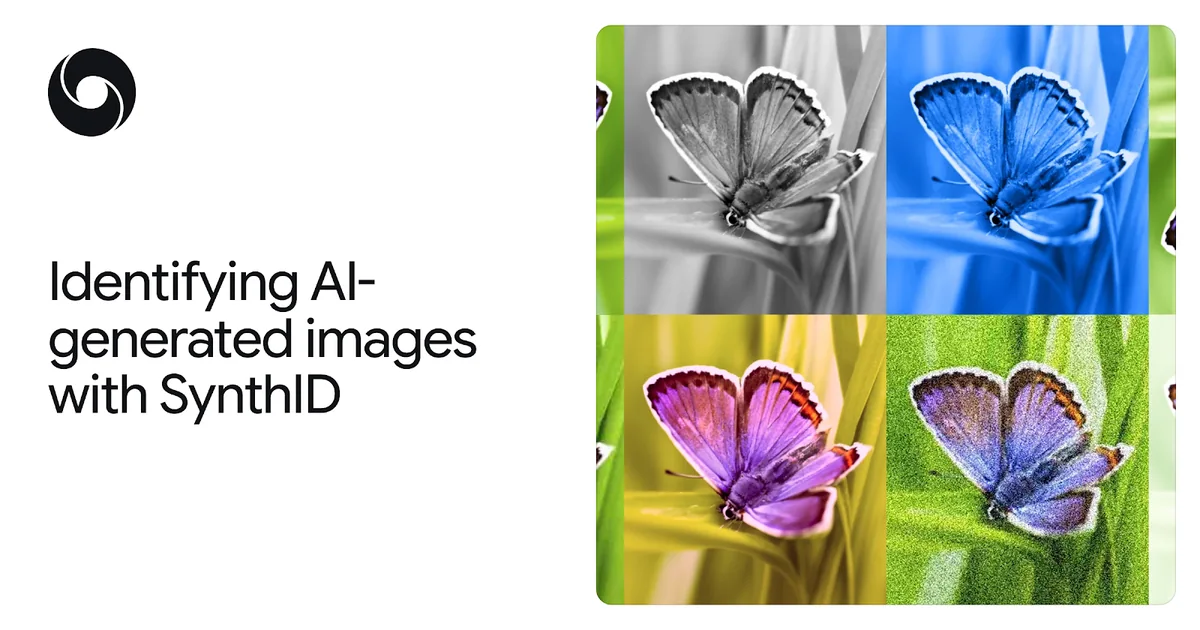
SynthID always on. All images produced by Google models carry SynthID, the watermark that flags the synthetic origin of the content. I cover it in more detail later, because it is an honest point that many articles gloss over.

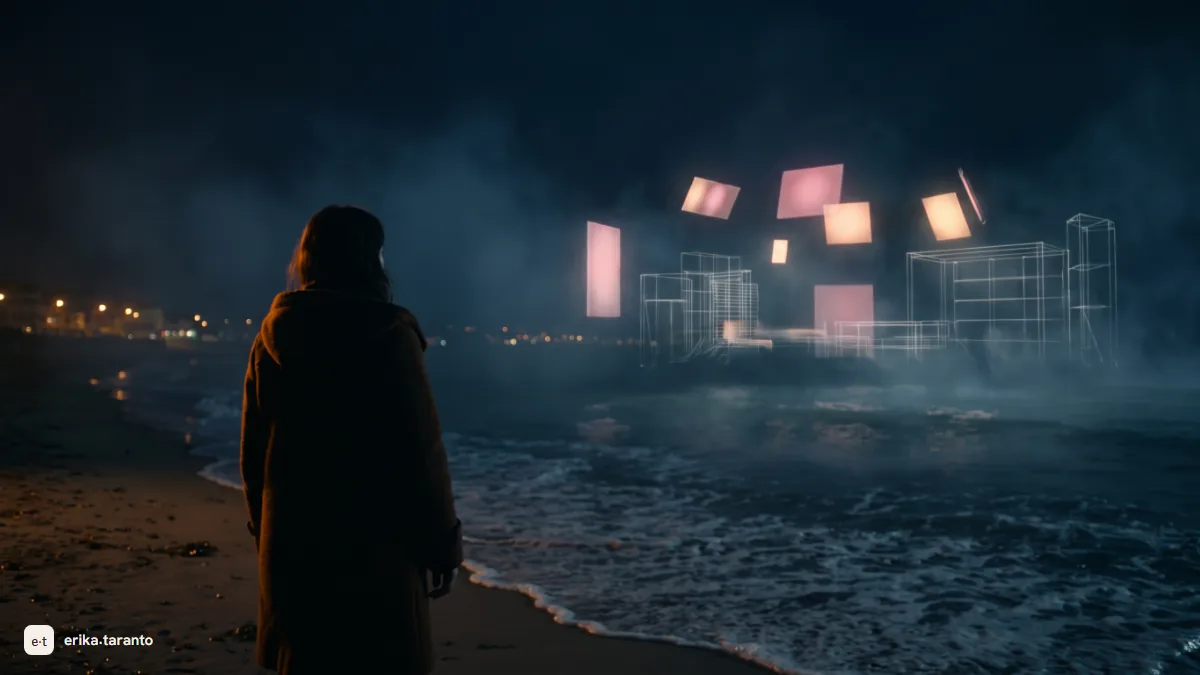
Below you find a historical example made with Imagen 4, one of the few outputs traceable to the model that circulate with a verifiable free license. I included it because it gives a good sense of the level of detail on landscapes and light, which was one of the fourth version’s strengths.

Imagen vs Nano Banana vs Gemini: let’s clear up the names
This is where the biggest confusion happens, so let’s sort this out once and for all. There are three words that look like three different products but are not, at least not in the way you think.
Imagen is DeepMind’s dedicated text-to-image family: it generates a scene from scratch, is historically strong on photorealism and (from v4) on typography, and is more of a “standalone model”. Nano Banana is not a separate product: it is the nickname of the native image generation inside Gemini, the multimodal model that understands text and images together. Nano Banana is built for conversational editing (you tell it “change the sky”, “add a person on the left”) and for fast iteration. Gemini is the app and the model family inside which all of this lives.
In 2026 Google decided to converge everything onto Nano Banana and to retire the Imagen branch. The practical message is this: anyone who searches for “Imagen 3” today and opens Gemini to generate an image is already using Nano Banana without knowing it. If you want the hands-on guide to the app where all this happens, I wrote it here: create images with Gemini. And if you are interested in the flagship model that has effectively replaced Imagen on the quality front, I cover it in detail in Nano Banana Pro.
| Imagen (3/4) | Nano Banana (Gemini Image) | |
|---|---|---|
| What it is | DeepMind's dedicated text-to-image family | Native image generation inside Gemini |
| How it works | Builds the scene from scratch from the prompt | Conversational editing, text + image prompt |
| Strength | Photorealism, typography (v4) | Fast iteration, in-chat edits, consistency |
| Status 2026 | Imagen 3 off, Imagen 4 shutting down Aug 2026 | Active branch Google is converging on |
| Where you use it | API/Vertex (residual), Gemini app history | Gemini app, AI Studio, API |
How to access Google’s image generator today
Now the practical part. “Imagen” as a name is disappearing, but Google’s generator is alive and you can reach it through several entry points. I list them from the simplest to the most technical.
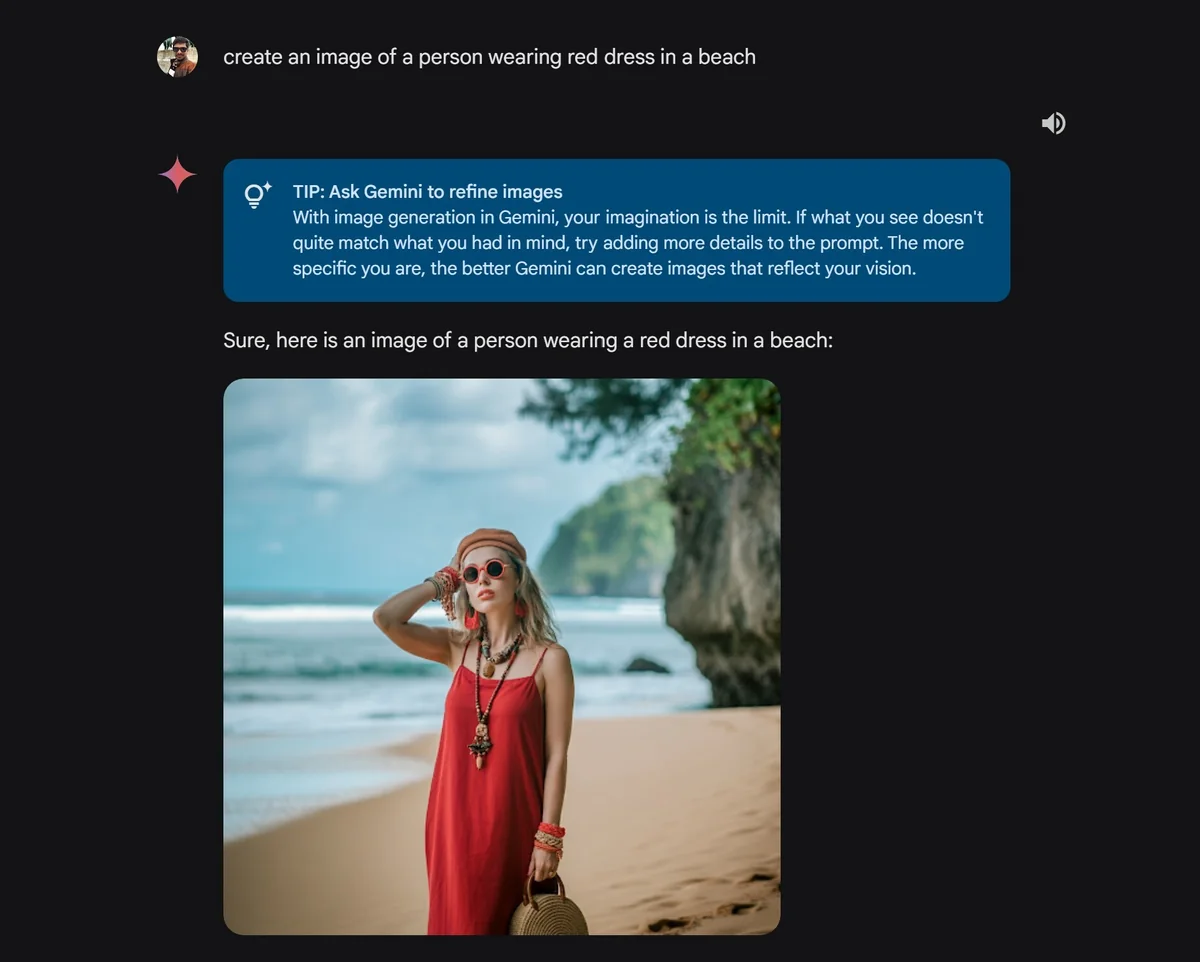
Gemini app and site. It is the most direct and free route. You only need a Google account, write the prompt (English works too) and get the image. I repeat the key point: the engine here today is Nano Banana, no longer Imagen 3. For everyday use it is what I recommend to most people.
ImageFX and Whisk (Google Labs). They are experimental, free tools inside Google Labs. ImageFX is a generation interface with prompt controls, Whisk works by combining reference images. They are great for playing and understanding how the model reacts, but they remain experiments, so availability and features can change.
Google AI Studio and Gemini API. This is the door for developers. In AI Studio you try the models in a visual environment, with the API you integrate them into your applications paying per use. This is where the per-image prices you see in the table below live.
Vertex AI. It is Google Cloud’s enterprise platform. It has a model lifecycle separate from the consumer Gemini API, offers data residency in the European Union (Italy included) and is designed for companies with governance and compliance requirements. If your case is a business one and you need to know where the data resides, this is where you should look, checking the status of individual Imagen endpoints because some may stay around longer.
Google Workspace. Image generation is also integrated inside productivity tools like Docs, Slides and Vids, to create visuals without leaving the document.
Availability in Italy and Europe: what works and what does not
This is the point that matters most in Italy and that almost nobody covers precisely. I will say it plainly, distinguishing what is available and what is not.
Basic image generation in Gemini is available in Italy, works with prompts in English and only requires your Google account. On this front you are not cut off: open the app, write, generate. The block concerns the personalized features. The capabilities tied to faces and real people, those Google groups under the Personal Intelligence umbrella, have not been rolled out in the European Union, for reasons linked to GDPR and the AI Act. In practice you can generate generic people, but the features that work on your own face or on real identities do not reach you.
There is also a useful historical note: the base version of Imagen 3 tended not to generate real people, and for certain advanced features a paid plan was needed (at the time the reference was Gemini Advanced, roughly €21.99 per month, a figure that should be re-checked today because Google’s plans have been renamed and may have changed). Do not take that figure as gospel: it is a historical reference, not the current price.
API pricing per image: the official numbers
Let’s talk money, with official per-image prices and no made-up rounding. These values concern pay-per-use API usage, not the free app. I report them because they are the only serious way to compare models on real cost.
| Model | Price per image | Note |
|---|---|---|
| Imagen 4 Fast | $0.02 | shutting down on August 17, 2026 |
| Imagen 4 Standard | $0.04 | shutting down on August 17, 2026 |
| Imagen 4 Ultra | $0.06 | shutting down on August 17, 2026 |
| Gemini 2.5 Flash Image (Nano Banana) | about $0.039 | destination recommended by Google |
| Gemini 3 Pro Image (Nano Banana Pro) | about $0.134 (1K/2K), $0.24 (4K) | top quality, 4K, world knowledge |
| Gemini 3.1 Flash Image (Nano Banana 2) | about $0.045-0.151 | current default in the app |
Two practical readings. First: Imagen 4 costs less per piece, but it makes no sense to build on it since it disappears in August 2026. Second: the price jump toward Nano Banana Pro is not a whim, you are paying for 4K resolution, consistency across multiple images and the world knowledge that model brings. For normal use, Gemini Flash Image remains the best balance between cost and quality.

SynthID: what stays written in the image
I always say this because it is honest and nobody explains it well: all the images you generate with Google’s models carry SynthID. It is a watermark that marks the content as AI generated. In the free products it is present in two forms, an invisible one embedded inside the pixels and a visible one applied to the image.
Why it matters to know. If you generate an image for any use, be aware it carries an origin marker. It is not designed to be removed, and its function is precisely the traceability of synthetic content, something that becomes increasingly relevant with the European AI Act. I am not telling you it is a problem, I am telling you to know about it upfront, not after the fact.
What to really use today instead of Imagen
Here comes the practical advice, the one you are probably here for. If you want to generate images with Google’s technology today, do not start from Imagen. Here is what I do and what I suggest.
For free everyday use open the Gemini app and work with Nano Banana: prompts in English, conversational editing, fast results. If you need maximum quality, 4K resolution or consistency across multiple images in a project, look at Nano Banana Pro, which is the flagship model and has effectively inherited the role Imagen had on the photorealism and text front. If you develop and need integration, work with the Gemini API and the Gemini Image models, not with the Imagen endpoints that are closing. If you are a company with compliance and data residency requirements, your place is Vertex AI, where you verify endpoints and lifecycle case by case.
The summary is one: Imagen was a great model, but the future of Google’s image generation is called Nano Banana inside Gemini. Building on Imagen today means building on an expiration date.
Conclusion
If you made it this far looking for Imagen 3, I hope I saved you a nasty surprise. The model many still mention is switched off, its successor Imagen 4 closes in August 2026, and Google’s image generation has migrated inside Gemini under the name Nano Banana. The good news is that quality has not been lost, on the contrary: it has grown and is easier to use, with prompts in English and in-chat edits. You just have to look in the right place, which is no longer called Imagen.
Want images like this for your brand?
Do you want to learn how to use these tools for your brand, with a clean workflow compliant with European rules? I work with them every day, from brand imagery to AI commercials. Discover my services or write to me here and let’s see together how to set it up for your concrete case.

Leave a comment
Comments are reviewed and approved before they appear.