
Sora 2 was OpenAI's video generation model, the first that made AI video a shared language: you wrote the project for it and it organized it into scenes, with a storyboard that let you adjust every segment on the timeline, clips of up to twenty-five seconds for Pro subscribers on the web and synchronized audio built in, dialogue included. OpenAI closed the app and the site on April 26, 2026 and switched off the API on September 24, 2026: if you have videos in there, you need to export them, because OpenAI then permanently deletes the data. The storyboard and the cameos remain in the history of AI video with no direct heir. Today scenes are split between Veo, Kling, Seedance and the directing platforms: here is what Sora was, what to save and what to use now.
You cannot write about AI video without Sora 2: it is the name that opened the era. And now its ending has to be told too: OpenAI closed the app and the site on April 26, 2026, and on September 24 it switched off the API as well. This guide started out as an explanation of how to use it; today I tell you what it was, what to save if you have clips in there and which engines take its place.
When it arrived, being Italian and working in this industry helped me see it from the right angle: people were using it and recognizing it in their feeds. Then the others arrived, all together, quality stopped being one company's privilege, and in the end Sora left. The map of the engines that remain is in the main guide create videos with AI.
The throne no longer exists, and in the end even the one who built it left: today you choose the engine for the scene, not for the brand. But Sora's storyboard remains a piece of history: nobody has built it an heir yet.
What Sora 2 was (and whose it was)
Sora 2 was the video generation model of OpenAI, the company behind ChatGPT. You gave it a description, or a whole project, and it generated video with camera work, movement and synchronized audio: the rain had its own sound, characters spoke with lips that followed the words. It lived inside the OpenAI ecosystem: you found it in ChatGPT, in the Sora app and in a few directing platforms. Until April 26, 2026.
The difference from the other engines was not quality, which by then was widespread: it was the way it read the text. You did not describe a shot to it: you described a video, and it organized it into scenes. It was the model that treated your prompt as a project, not as a photograph to animate.
It used to be hugely popular. Then the competition arrived
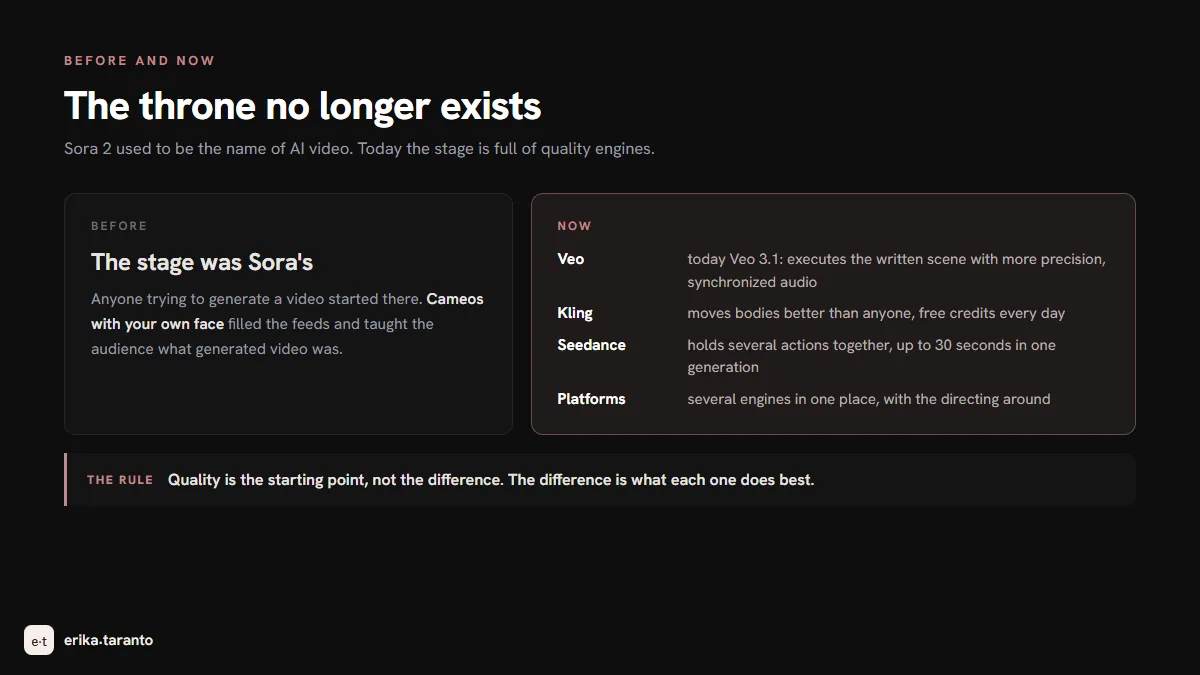
Honesty first, because it is the reason this guide exists in this form. When it arrived, Sora 2 was the name of AI video: anyone trying to generate a video, in Italy and beyond, started there. The cameos with your own face filled the social feeds and taught the audience what generated video was.
Then that advantage was gone, and pretending otherwise would be a disservice to you: the competition is relentless, because a great many tools now make good video.
- Google's Veo (today Veo 3.1) executes the written scene with more precision and also generates synchronized audio;
- Kling moves bodies better than anyone;
- ByteDance's Seedance holds scenes with several actions together and reaches thirty seconds in one generation;
- the directing platforms put several engines in the same place, with tools the engine alone does not have.
Whoever chooses "the best one" today is asking the wrong question: quality is the starting point, not the difference. The difference is what each one does best, and Sora 2 did one thing better than everyone.
The shutdown: the dates that matter
OpenAI announced the shutdown with precise dates, and it is worth knowing them if you have anything in there:
- app and site closed as of April 26, 2026: you can no longer generate from ChatGPT or the app;
- the API stayed on until September 24, 2026, then it was switched off: since that date there is nothing left to migrate;
- you export your content from the Sora sunset page (sora.chatgpt.com/sunset): press Export, wait for the email, download. After the shutdown, OpenAI deletes the data permanently.
If you have clips that matter, do not wait for the last week: the export is the only thing left of Sora when everything else is off.
The legacy: the storyboard
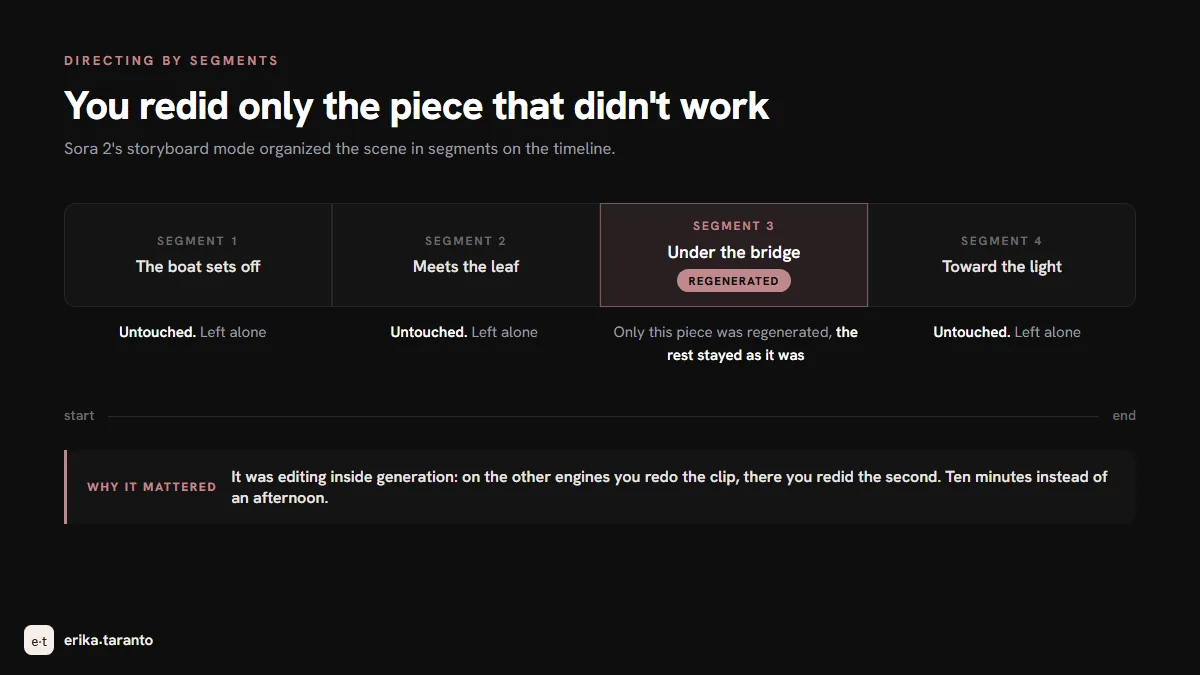
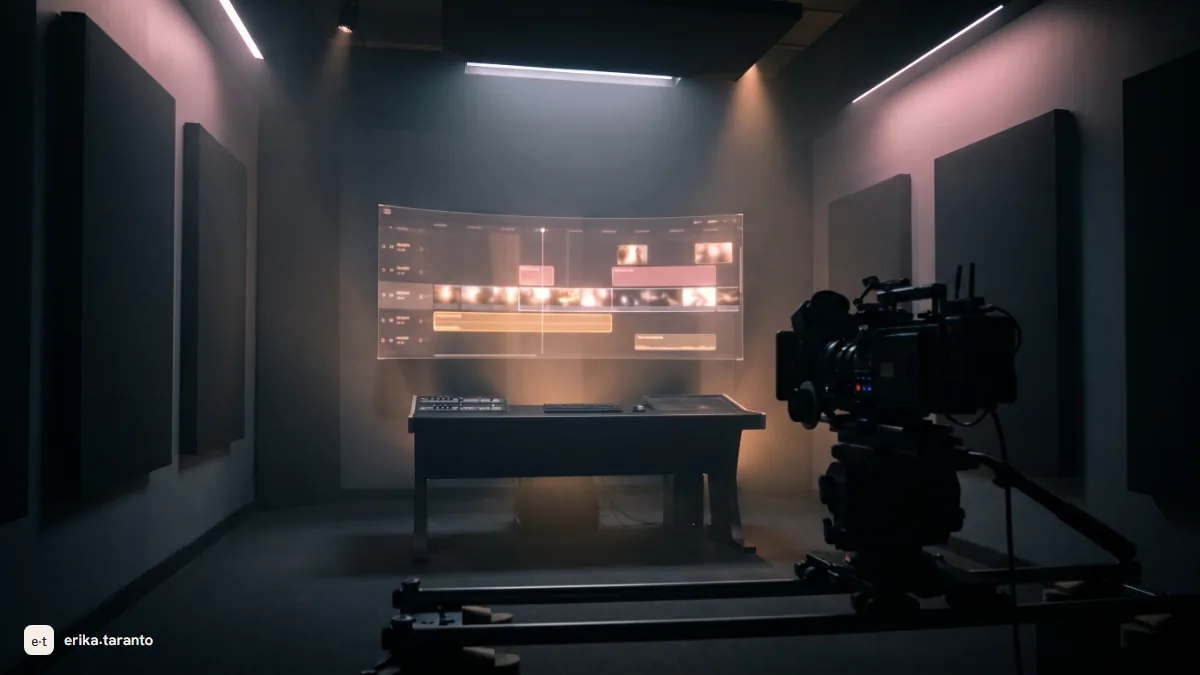
The storyboard mode is the reason Sora 2 stays in the history of AI video even now that it is gone. The video was organized in segments on the timeline: every piece could be adjusted on its own, you regenerated the one you did not like without touching the rest, and the scene ran up to twenty-five seconds (for Pro subscribers, on the web) while keeping your direction intact.
Translated into real work: it was editing inside generation. On the other engines you redo the clip; there you redid the second that did not work. For a two-line dialogue where the first line was good and the second was not, it was the difference between ten minutes and an afternoon. It is the piece that is missed most today: no engine has segment-level direction this mature, and today you redo that direction in editing or with the directing platforms.
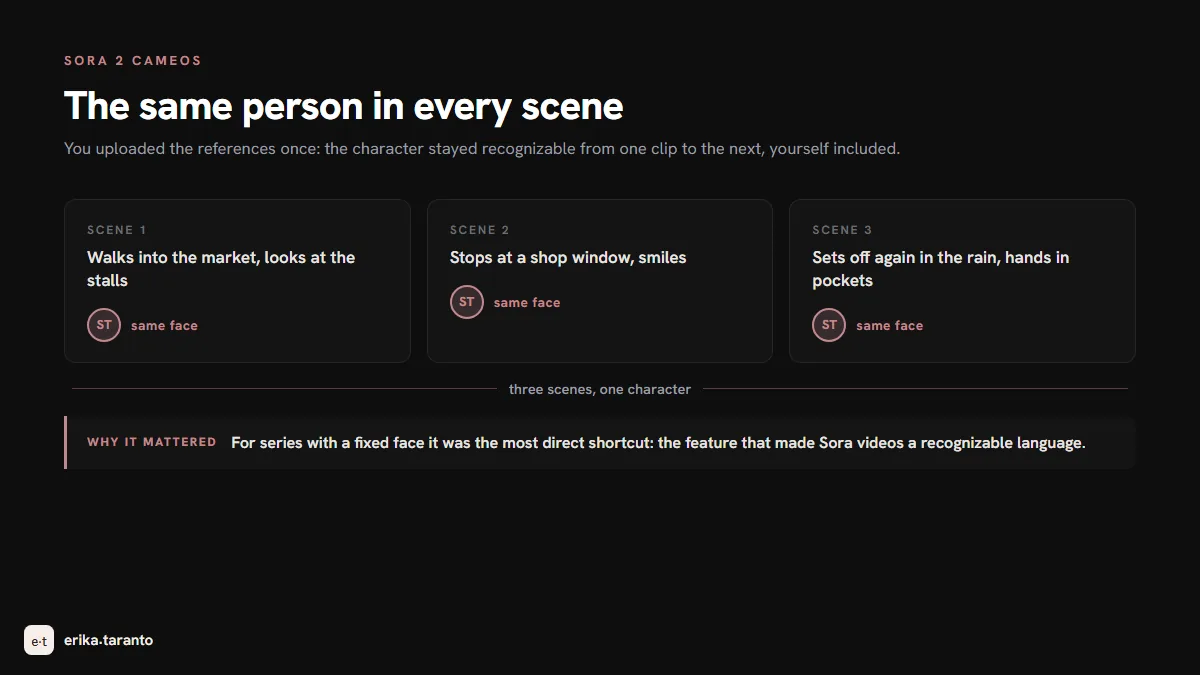
The second area nobody had taken from it was cameos: the possibility of putting a recurring person inside the scenes, yourself included. You uploaded the references and the character stayed recognizable from one clip to the next. For creators making series with a fixed face it was the most direct shortcut; in work for brands I used it little, because there I handled product consistency better with the references of the other platforms.
Sora 2 free: what the free plan was like
While it was active, you could try it for free, with clear limits: a few generations per day, at lower resolution and with watermark. Enough to understand what kind of tool it was, not to build a project. Today that route no longer exists.
The truly free routes right now: Google Flow and Dreamina give credits every day (they decide the amount and it can change) and you learn from them because you can practice continuously; video in the Gemini app, by contrast, needs a paid Google AI plan. The complete picture is in the guide free AI video generators.
Have videos on Sora? Save them in five steps
- Go to the sunset page with the ChatGPT account you used for Sora: the address is sora.chatgpt.com/sunset.
- Press Export: the preparation of the archive with your content starts.
- Wait for the email: it arrives when the archive is ready for download.
- Download and keep the files elsewhere: after the shutdown, OpenAI permanently deletes the data associated with Sora.
- If you used the API, the migration had to happen before September 24, 2026: since that date the API is off and there is nothing left to migrate.
The prompt on Sora: a lesson that stays
On Sora the prompt had a different shape from elsewhere: not the shot alone, but the small project. An example I used for my first tests, designed for the storyboard:
A paper boat sails down a rainy gutter, meets a leaf and carries it along, then slips under a bridge into the light; camera follows at water level, overcast afternoon, rain and distant traffic.
Three moments in order, connected, the camera declared once, light and audio named. It was the format Sora translated into scenes best: the moments became segments, and the segments got adjusted one at a time. It is also the format I carry with me on the other engines: describing the video as a project makes today's generations more precise. The general rules of the video prompt, including the traps, are in the dedicated section of the main guide.
How much Sora 2 cost
Sora 2 was not bought separately: you paid for it through the ChatGPT subscription. Here is how it looked while the service was active:
| Plan | What you got | Who it was for |
|---|---|---|
| Free | a few generations per day, lower resolution, watermark | Understanding the tool |
| ChatGPT Plus | included in the paid ChatGPT Plus subscription | People using it every week, creators with recurring series |
| Pro | removed the watermark and raised the limits | Intensive production inside the ecosystem |

The honest limits it had
- Quality was no longer a reason to choose it. Veo followed the directing with more precision, Kling moved bodies better, Seedance held the sequences: they were all television grade.
- The free plan was tight. A few generations per day, low resolution, watermark: enough to understand it, little for practicing every day.
- It lived mostly in the OpenAI ecosystem. A few directing platforms also had it in their catalog, Higgsfield included, but today it has disappeared from there too: anyone working with several engines and tools around them goes through Higgsfield, which has Seedance, Kling and Veo.
- The storyboard was a territory nobody had taken from it, and while it was active it was worth it: but if your work was bodies, precision or sequences, the other engines were faster.
- Writing in English paid off twice there too. It accepted Italian, but projects written in English became scenes with more precision.
How I split the scenes today
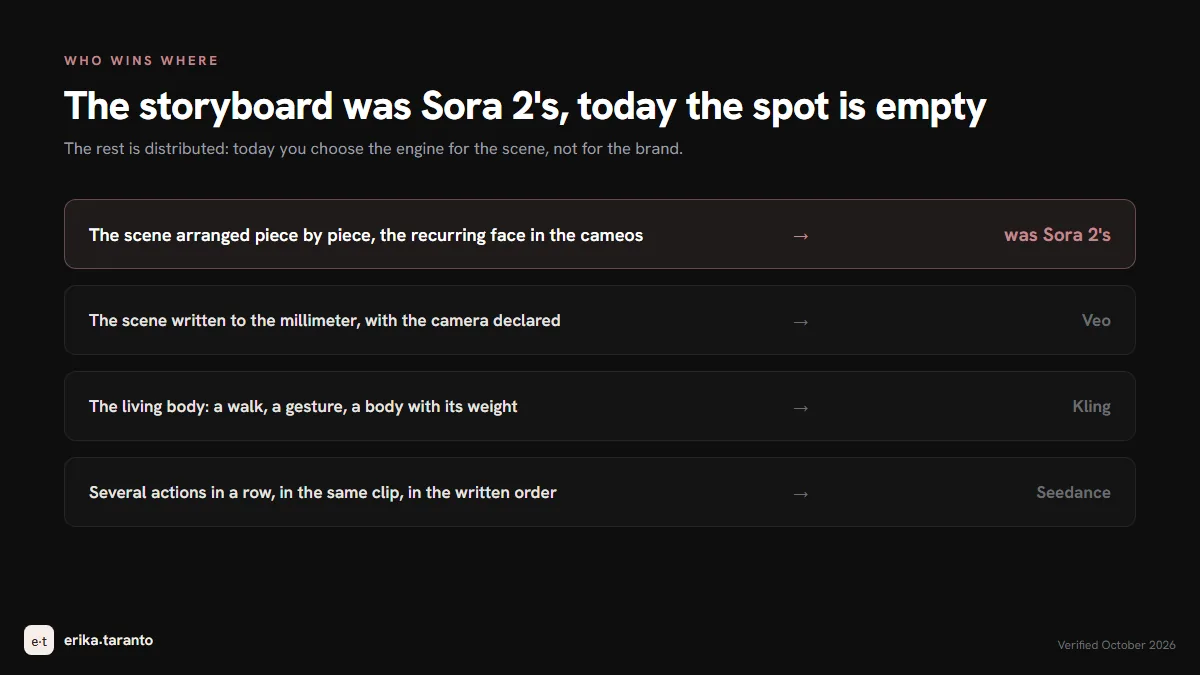
The spot that belonged to Sora 2, projects with a timeline to control and recurring faces, is taken over today by editing work and image references: segment-level direction has no direct heir. The rest goes as always:
- the shot written to the millimeter: Veo executes it with more precision;
- the people who must look alive: Kling moves bodies better than anyone;
- the scenes with several actions in a row: Seedance remembers them all;
- whole projects, with several engines and direction around them: Higgsfield.
The guides of the video path
- Create videos with AI, the complete map of the engines (the pillar of this guide);
- Free AI video generators, all the ways at zero cost;
- Veo, the engine that executes the written scene;
- Kling AI, the realist;
- Seedance, the interpreter of scripts;
- Higgsfield, the directing platform.
Sources
- OpenAI help center, the Sora discontinuation (dates, export, data deletion): help.openai.com
- OpenAI, Sora: openai.com
- Digitimes, OpenAI reportedly in talks with a startup to bring Sora back (October 13, 2026, press report not confirmed by OpenAI): digitimes.com
- Clip duration, cameos and plans: as they were while the service was active, last check August 2026; the shutdown dates are verified as of October 2026 on the OpenAI help center
For updates and news, there is my Telegram channel
I publish the latest news on AI video tools there first.
Leave a comment
Comments are reviewed and approved before they appear.